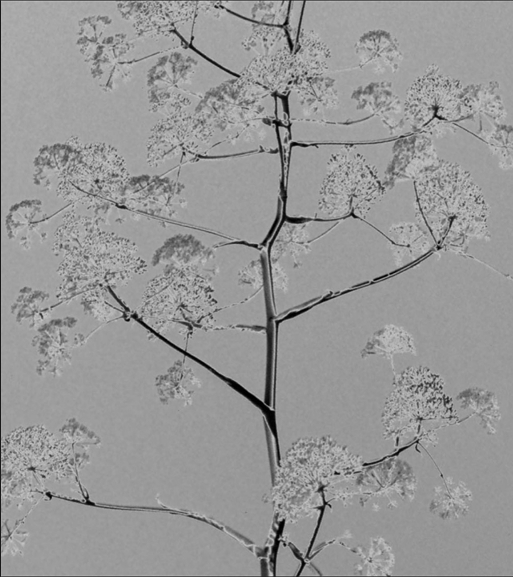
The project “Entrelazos” explores the intersection of memory, youth, and the body, seeking to deepen self-knowledge and understanding of the surrounding environment.
The final outcome will be a video art piece accompanied by process journals that detail the assembly of images and the references considered. This project is relevant because it presents, in a personal and intimate way, perceptions of the self as shared by youth, merging memory and body through an experimental audiovisual approach. In addition, it addresses themes that many of us may have thought about but not expressed, becoming especially powerful by bringing these conversations into the public sphere through an immersive and enriching experience.
Duality between true identity and the mask presented to the world, as well as the psychological and emotional reasons that may lead an individual to adopt this mask as a means of protection or psychological survival.
Different ways in which a person chooses to represent themselves, navigating between inner truth and external image.
It is not an “is,” but a “I am”: so mysterious that it has taken on the neutral mask of the “is” in order to become perceptible or pronounceable. Perhaps to avoid being annihilated by despair.
Lacan, J. (1953)
The Technical Writings of Freud. Siglo XXI Publishing.
Behind a mask, there is much more.
The body expresses maps of the world through the layers of its memory.
Emotional cartographies in constant transformation, existing only within the contemporaneity of each individual, shaped by personal experiences.
“The mirrors that surround us show us our reality, but it is through the eyes of others that we truly see ourselves.”
Existence unfolds as a collection of strange fragments.
Projects that explore memory and culture through visual and sound installations, avoiding static representations and encouraging multiple interpretations. They use image assemblages to create symbolic connections. The installation by Didi-Huberman and Gisinger, as well as Correspondences by Patti Smith and Soundwalk Collective, invite reflection and exploration through immersive environments that challenge traditional categories of art. Like Warburg’s Mnemosyne Atlas, both projects seek to reconfigure memory without fixing it, generating new associations and suggestions through the combination of images and sounds.
Installation, Montage,
Aby Warburg’s Mnemosyne Atlas.
Exhibition by Georges Didi-Huberman and Arno Gisinger, New Ghost Stories, at the Palais de Tokyo, Paris, 2014. © André Morin.
Ever Gaia 213 (2023) by P. Okoyomon and D. Hildyard, and The Baron in the Trees (1957) by Italo Calvino, explore the search for an authentic existence in harmony with nature, promoting individual freedom through an authentic way of seeing the world. In turn, Towards a New Aesthetic (2023) by Duyi Han seeks a new way of understanding the relationship between humans and their visual environment, inviting viewers to experience a deeper connection with time, space, and existence. In doing so, it highlights the importance of the bond between the individual and their surroundings in the exploration of human complexity.
Instalation Duyi Han
The essay The Body Still (1980) by Roland Barthes and Ai confini del corpo (1992) by Franco Rella explore, respectively, the meaning of the body in contemporary society and the limits of bodily experience. In turn, Haptopias (2018) by Ricardo Sarmiento examines the interaction between the senses and the body, highlighting the importance of the concept of the haptic. These works enrich self-knowledge by delving into our tactile and emotional preferences. Additionally, concepts such as “YUTORI” offer complementary perspectives on the experience of the present, thereby deepening the understanding of the complexity of human experience and its relationship with the environment.
Dziga Vertov’s “kino-eye” technique, as presented in I, the Eye (1920s), is valuable for the creation of video art due to its focus on objective observation and the spontaneous capture of everyday reality. By eliminating scripts and prearranged performances, this technique allows for a more authentic representation of human experience. In video art, the kino-eye can capture ephemeral moments and everyday details, as well as address social and political themes in a direct and unfiltered way, challenging traditional narrative conventions and leading viewers toward deeper and more personal reflections. Moreover, the emphasis on creative editing and montage makes it possible to experiment with structure and rhythm in order to achieve emotional and conceptual impact.
On the other hand, Sergei Eisenstein’s theories of cinematic montage, as described in “The Cinematic Language: Different Languages within Cinema” (1920s), offer tools for creating meaning and emotion through the juxtaposition of images, the manipulation of rhythm, and the construction of emotional tone. These principles, together with experimentation in retinal persistence and the visual perception of the zoetrope (1860), lay the foundations for understanding cinema and other forms of moving visual media, emphasizing the importance of the illusion of movement and visual storytelling in cinematic art and visual entertainment.
| Color | Sensation | Texture | Adjective | Verb | Perspective | |
|---|---|---|---|---|---|---|
| Geocuerpos | green, blue | ice | earth | lively | to adapt | inmersive |
| Cuerpo Cavernoso | skin | sweet | desert | deep | to observe | zoom |
| Umbral Resonante | green | sour | feather | vibrant | to knit | aerial |
| Anamnesis Carnal | magenta | hot | rocky | serene | to embody | frontal |
| Espejos vitales y acuosos | blue | cold | leaves | greenish | to narrate | superior |
Between dreams and realities, the threshold opens — a portal of emotions the soul carries us through. In the dance of dreams, the heart pulses, an echo in the void, an infinite melody. At the boundary between the known and the imagined, empathy blooms, souls meet, an ethereal bond in which everything is shared, within the resonant threshold where dreams intertwine.
Behavior:
Connection between reality and dreams
Meaning:
Empathy through dreams and imagination, creating bridges between realities.
In the dance of opposites, in the fluidity of movement, the body adapts, transforming itself in every pause. In every landscape, in every journey and encounter, the body merges with the earth, with the wind. In connection with nature and its mysteries, the body becomes a map, an idea, a geobody that moves between dreams and destinies.
Behavior:
Adaptation to changes and movement.
Meaning:
Relationship between bodies and landscapes.
In the reflection of deep waters, the stories we tell ourselves are revealed — a distorted image, a hidden truth, in the vital mirror where we meet ourselves. Each word, each gesture, is a fragment of the narrative we weave, in the watery mirror where time slows down, we reflect our essence into the universe.
Behavior:
Narratives that reflect fragments of our essence.
Meaning:
Intersection between lived experiences and our identity.
In the hidden shadows of the mind dwell the deepest mysteries, memories that pulse in every latent corner of the cavern, in every second. The body is the temple where the stories of the past are kept, the scars of the soul — a labyrinth of paths that are retraced, a universe of secrets time does not claim.
Behavior:
Exploration of hidden and darker parts of the self.
Meaning:
It symbolizes the exploration of the inner layers of being.

In the depths of being, in the muteness of the flesh, ancestral memory lies—the essence that guides us. A temporal journey, embodied remembrance, sealed in every heartbeat, in every cell. The flesh, a book of our history, traces of the past, shadows in memory. Carnal anamnesis, resonant life, secrets unveiled, penetrating truths. Temple of the body, inner cavern, guarded knowledge, greater wisdom. Carnal anamnesis, ancestral memory, in every whisper, in every visceral beat. Exploring the hidden, connected in the ethereal, we discover the essence, the uncertain revealed. We define ourselves, we become — beings of light and shadow, of anamnesis, serene.
Behavior:
A profound relationship between memory and the body.
Meaning:
The body as a living encyclopedia of our personal and collective history.
The process journals critically document the artistic development, contributing to contemporary discourse in design and multimedia art.