Quién Mató a Palomino Molero
Set & costume design
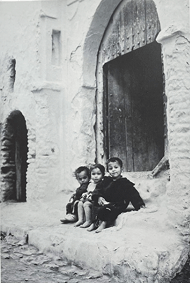
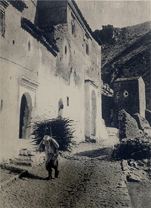
I designed a model based on the screenplay of Who Killed Palomino Molero by Mario Vargas Llosa, imagining the film set in Morocco and Spain around 1925. The model included details of geographical features, fictional costumes, and authentic scenography to transport viewers into the world of the narrative.
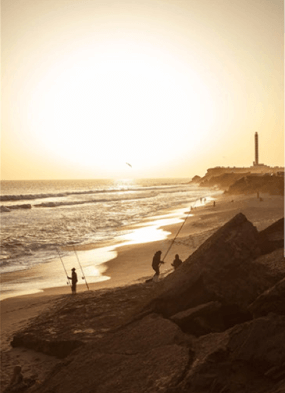
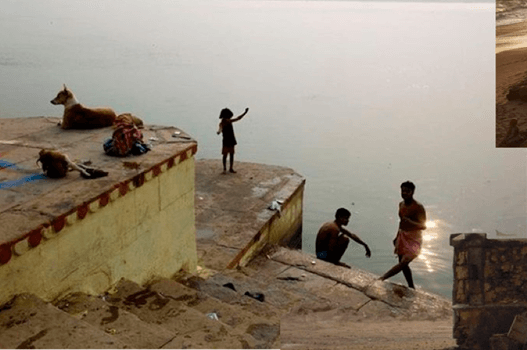
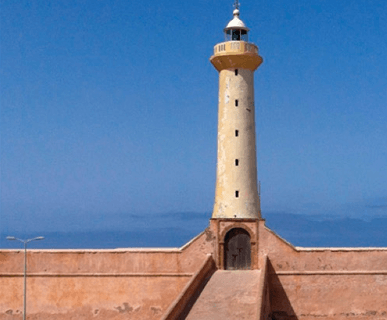
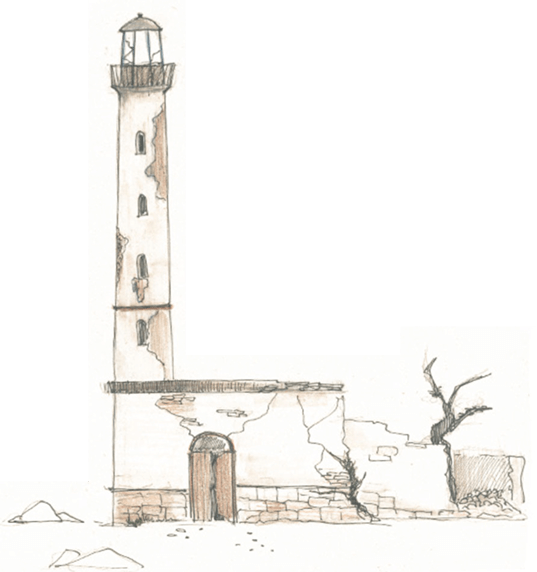
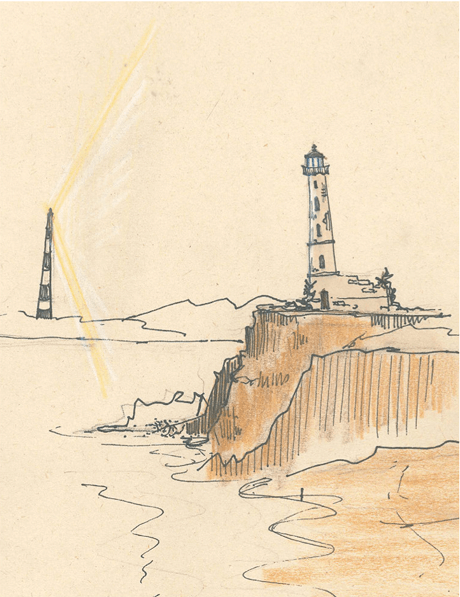
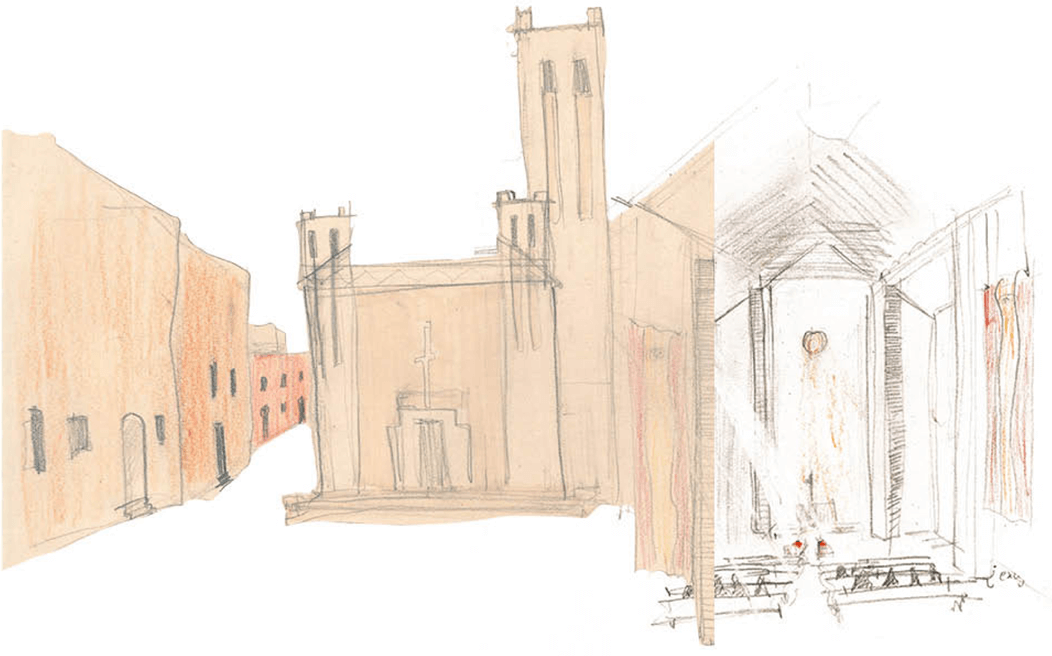
The Lighthouse is one of the few vertical elements in the landscape.
It is a place forgotten by ancient colonizations and, unlike the military base, it is a fortress—yet formally completely opposed to it.
While the Base is the place where Silva feels least secure in himself, the Lighthouse represents the opposite: his refuge.
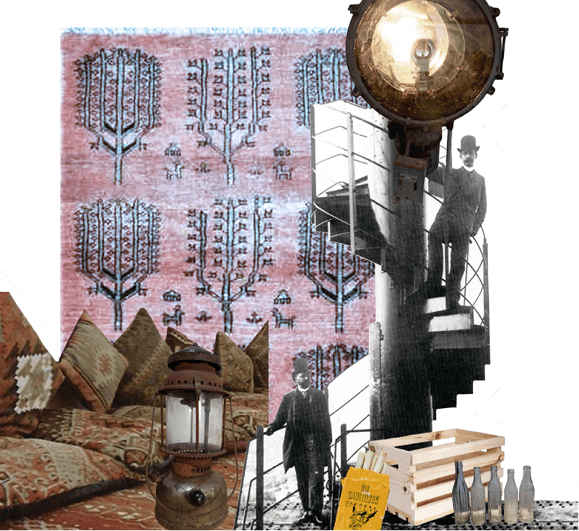
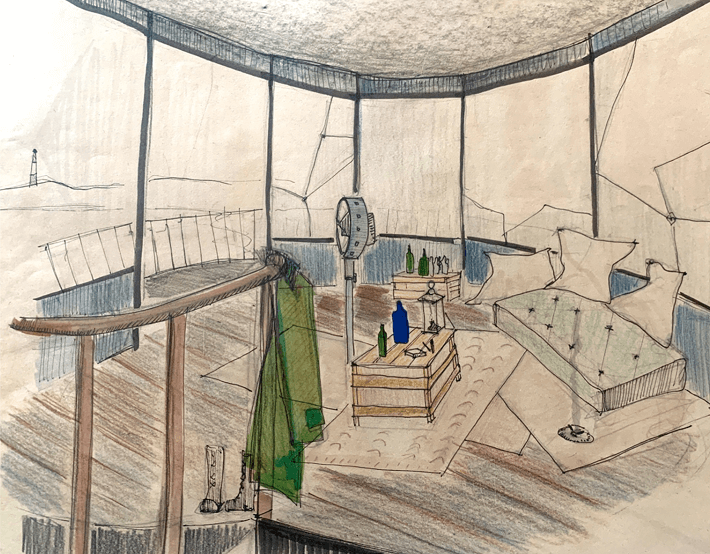
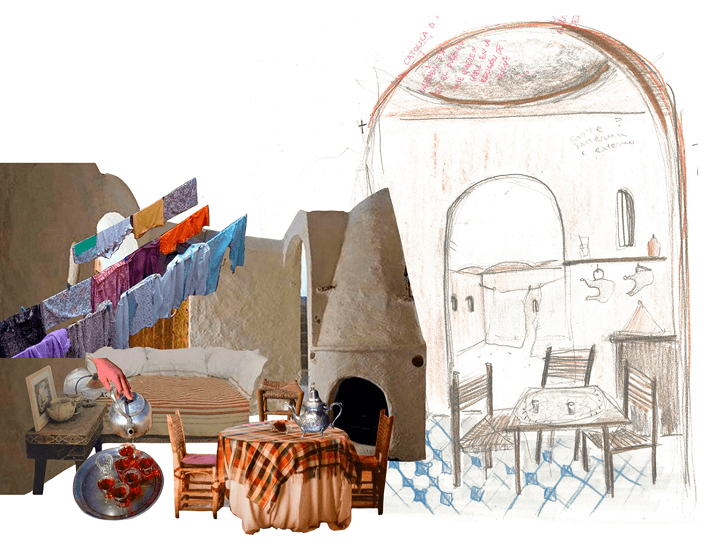
The lieutenant’s den conveys tranquility, being a perfect place for the characters to relax and let go. With faded tapestries, a mattress, and cushions, the atmosphere acquires a Moroccan vibe, revealing the Lieutenant’s sympathy for Morocco and reinforcing the barrier between him and Spanish power.
The broken glass is the only thing the lieutenant never repaired. As a recurring pattern, it serves as a backdrop for the characters when they confess their sins and metaphorically symbolizes the dramatization of these moments.
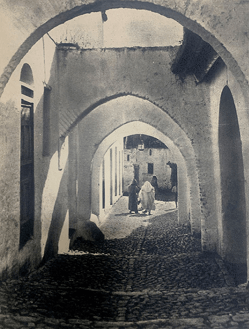
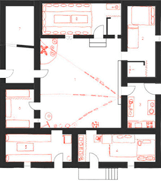
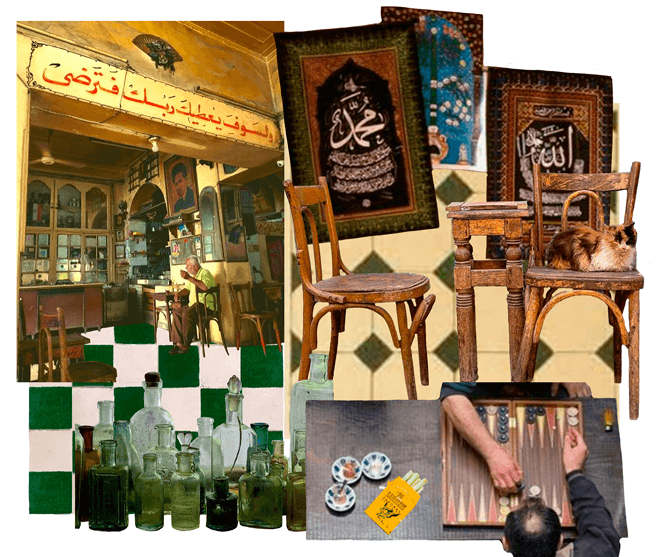
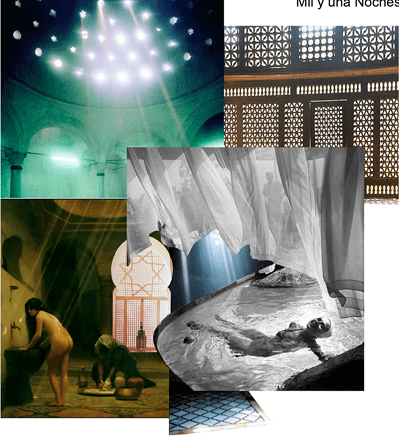
Through the smoke and the heat-laden air, a person entering begins to glimpse a pool, connected to several others. The humidity, in contrast to the aridity, awakens the senses and desires—especially when accompanied by women dancing in tight, wet garments clinging to their bodies, more sensual than if they were naked. The men, smoking hookah and drinking absinthe, allow themselves to be carried away by these odalisques into magical worlds reminiscent of One Thousand and One Nights.
In this environment dominated by water and its red light reflections, the dreamlike atmosphere intensifies thanks to wooden partitions with geometric patterns typical of Morocco. These partitions create a dual visual play: they confuse the true architectural layout of the den, constantly altering it and generating more private spaces, while still allowing light to pass through and shadows to be projected behind them. It is the perfect setting to stimulate fantasy… and to spy on Dufò.
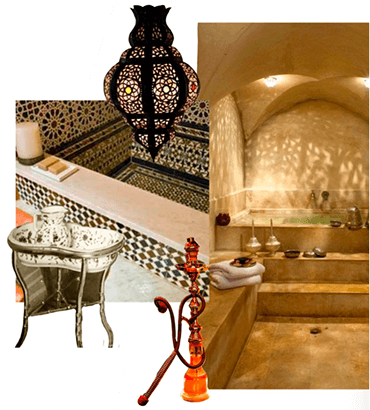
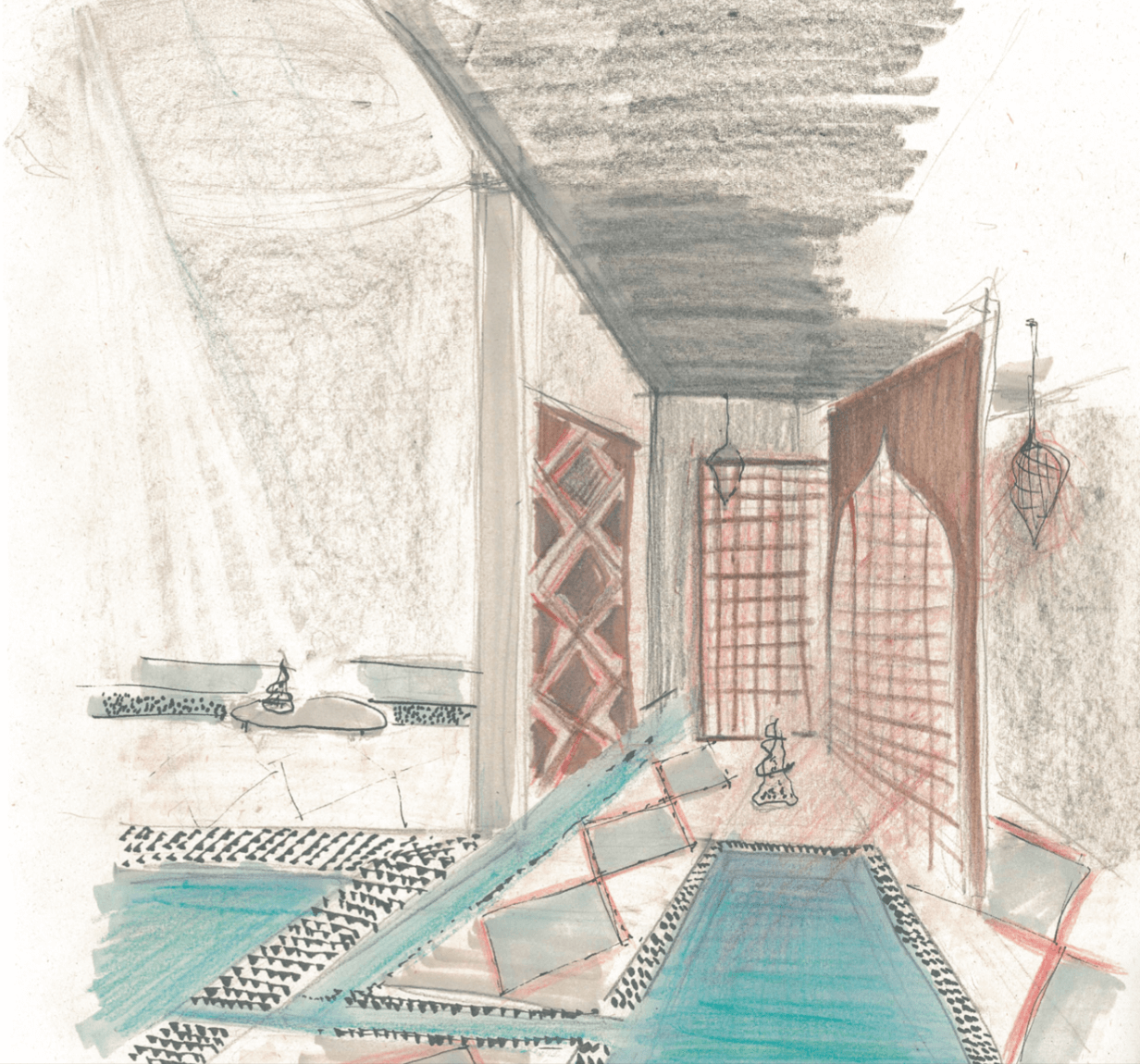
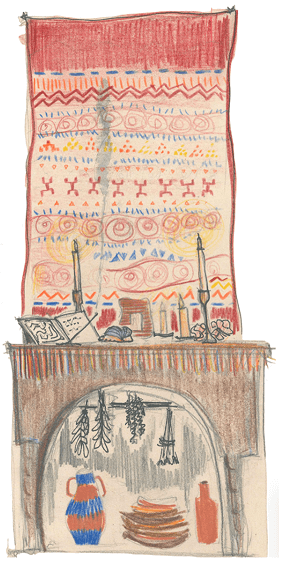
The altar resembles an ancient path no longer walked, yet one that preserves the memory of its warmth from past times. Although Palomino no longer physically inhabits his mother’s house, his memory endures forever — a warmth that, unlike fire, truly comforts. The former path is now adorned with amphorae and finely decorated clay vessels, as well as dried herbs that Asunta uses in her rituals.
At the center of several fetishes lies a small photograph of her son and two shells that gleam in the candlelight, all resting on a tapestry woven with stories.
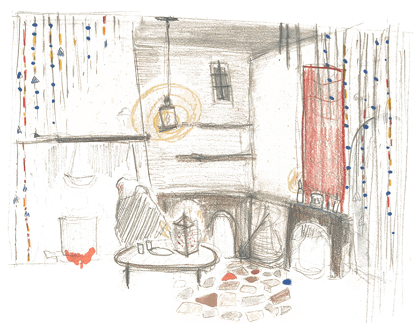
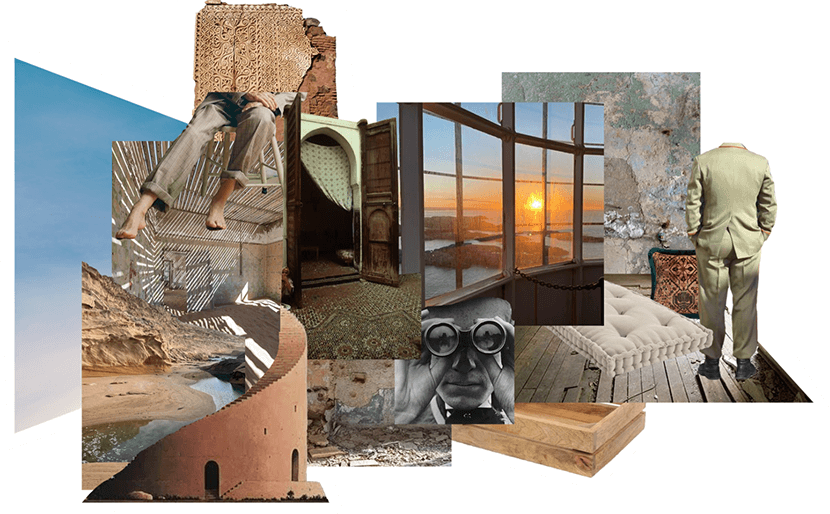
Desert-like atmospheres, where space and silence meet the dreamlike sense of illusion.
A distant escape to create worlds whose existence is impossible under the rigidity of norms.
A refuge that provides safety and hope.
c
r
e
d
i
t
s
Carmen
Laura Sofía Gómez Candamil
Roberta Longo
Milica Tamamovic